





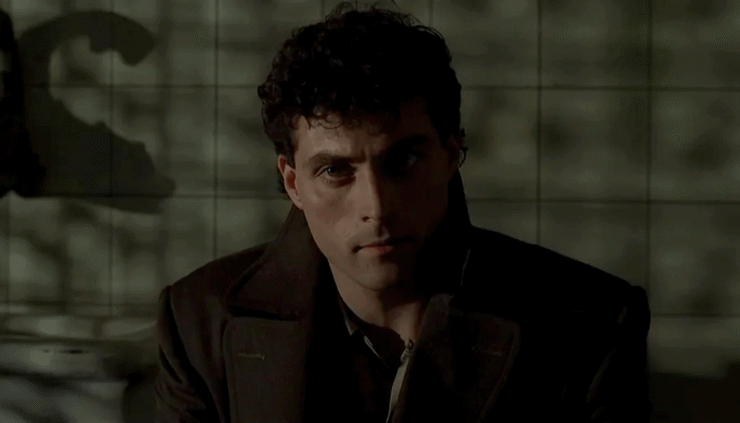
Dark City (1998) Directed by Alex Proyas. Written by Alex Proyas, Lem Dobbs, and David S. Goyer. Starring Rufus Sewell, Kiefer Sutherland, Jennifer Connelly, William Hurt, and Richard O’Brien.
In November of 1893, a German judge by the name of Daniel Paul Schreber checked himself into a psychiatric hospital. He had been suffering from insomnia and delusions following the stillbirth of his first child. He had been hospitalized for his mental illness before, and both his father and brother had suffered from severe depression. Schreber would remain hospitalized in various institutions for nearly a decade. During that time, he wrote extensively about his experience of schizophrenia, and he would go on to published a book called Memoirs of My Nervous Illness in 1903.
Schreber died in a psychiatric hospital in 1911, having spent most of the final two decades of his life institutionalized. He would probably have faded from public consciousness, as so many mentally ill people have done throughout history, had his memoirs not caught the attention of Austrian psychoanalyst Sigmund Freud. Freud never met or treated Schreber, but that did not stop him from extensively analyzing and interpreting Schreber’s illness in his 1911 case study “Psycho-Analytic Notes on an Autobiographical Account of a Case of Paranoia.”
Other psychiatrists have spent the last hundred and fifteen years debating, critiquing, and re-evaluating Freud’s analysis of Schreber’s autobiography, which is how Daniel Schreber has become one of the most well-known psychiatric patients in history. There are multiple books, plays, and even songs about Schreber’s life and illness; one recent example is the BBC 3 radio play Schreber, which was originally written as a screenplay by Anthony Burgess in 1975 but only performed for the first time, starring Christopher Eccleston, in 2020.
Among those influenced by Schreber’s memoirs was filmmaker Alex Proyas, who was born in Egypt but grew up in Australia. As he says in the DVD commentary for Dark City, whichwas released in 2008, he was interested in Schreber’s experience of “soul murder,” a vivid term for what many psychoanalysts have interpreted as an experience of being oppressed and controlled to the point of permanent harm during his upbringing. Whether or not that accurately represents Schreber’s childhood is still a matter of debate in psychiatric circles, but the imagery and the terminology intrigued Proyas when he was fresh out of film school in the 1980s and making a living directing music videos, as so many filmmakers have done in their early careers.
That inspiration kept percolating in the back of Proyas’ mind as he began to make feature films. His first movie was Spirits of the Air, Gremlins of the Clouds (1989), a post-apocalyptic sci fi Western which did the festival rounds in 1990 and seems to have had a very limited theatrical release. But it was enough to catch the attention of producers Jeff Most and Edward Pressman, who were looking for somebody with music video experience to direct an adaptation of James O’Barr’s comic book series The Crow. Proyas wasn’t their first choice, but he’s who they ended up hiring, and that’s how he came to direct the film that fifteen-year-old me imprinted on so strongly that thirty-some years later I still sometimes say “It can’t rain all the time” to myself when I need to hear it.
We’re not here to talk about The Crow (1994), even though I could talk about The Crow forever. It’s relevant here because, in spite of the shocking death of actor Brandon Lee on set, the film was both a critical and commercial success (with lots of people, not just depressed fifteen-year-old girls), which gave Proyas the reputation and clout he needed to set about making his personal passion project.
The ’90s were a great decade for film for many reasons, but my favorite among them is the widespread embrace of really freaking weird sci fi. We’ve watched several of them already: Total Recall (1990), 12 Monkeys (1995), Event Horizon (1997), The Fifth Element (1997), The Matrix (1999), eXistenZ (1999), and so on. There are several more still on my to-watch list. It was a wonderful time for sci fi films to be weird and dark and captivating and full of uncomfortably big ideas.
Dark City is one of the weirdest, and I love it. It’s a brilliant movie that got made at exactly the right time, because it likely would have been pressured to be very different had it come earlier or later. I’m glad a sci fi film this completely bananas was able sneak in under the wire before Hollywood decided most sci fi had to be about straightforward heroism for mainstream audiences.
Proyas had been contemplating the ideas that would evolve into Dark City for years. In a 1997 production report in Cinefantastique—in which the movie was still called Dark World, one of the titles the studio considered—Proyas explains that the first seed of the story came from imagining a classic hardboiled ’40s-style detective slowly going mad as he pursues a case in which there is no rational answer. It’s a great first idea, but it would end up being just one ingredient in what would become a very crowded pot.
At some point Proyas brought on co-screenwriter Lem Dobbs to work on the script; the third screenwriter, David Goyer, came a bit later in the process. Goyer says (in the DVD interview) the studio (New Line) hoped he would tone the weirdness down a bit, but he cheerfully admits that he instead helped make it even weirder.
That’s the most important thing to take away from the story of how this film got made. Nobody involved in the writing or filming was trying to made a broadly accessible sci fi film for mainstream audiences. They were making a strange, dark, confusing movie for the weirdos willing to give it a shot.
For the most part, they were able to make the movie they wanted to make. If only it weren’t for that stupid introductory voiceover.
The movie is supposed to open with an amnesiac man waking from unconsciousness in a bathtub. I’ve seen this movie a few times before, so I was very confused when I watched it this time (streaming via Kanopy—support your public libraries!) and it opens instead with a prologue voiceover both telling and showing the sci fi worldbuilding. I did not remember that! That is how the theatrical release starts, whereas the DVD director’s cut does away with it, and I’d only ever seen the DVD version before. (That’s how most people saw this movie. It was not exactly a box office sensation.)
The reason for adding a prologue that spoils the entire film was exactly what you expect: After a test screening audience expressed confusion, the studio asked for an explanatory voiceover. Nobody involved in the film wanted to add it. In the behind-the-scenes commentary, lead actor Rufus Sewell hilariously states, “I think they probably felt they didn’t want to alienate certain people… But I just think ‘fuck ’em’.”
(A small related rant: On a recent long plane trip, I tried watching two 2025 movies—Zach Cregger’s Weapons and Bong Joon Ho’s Mickey 17—but I turned them both off because I was so annoyed by how both movies had introductory voiceovers explaining the premise to me before I had a chance to watch any of the film. I know there is a deeper conversation to be had here about attention economy and audience unwillingness to sit with even the tiniest bit of uncertainty, and that’s an important conversation to have. But I still need movies to stop doing that, because I hate it. Let me just watch the movie.)
Regardless of which version of Dark City you’ve seen, pretend the voiceover doesn’t exist, because it ruins the experience of diving head-first into the film’s glorious what-the-fuckery. The film’s noir bones mean the disorientation is deliberate, the moody atmosphere is all-encompassing, and the audience is supposed to every bit as lost as the main character as he tries to figure out what’s going on.
The film opens with an amnesiac man (Sewell) waking in a bathtub. We’ll eventually learn that his name is John Murdoch, but he doesn’t know that yet. He’s in a hotel room with the gruesomely murdered corpse of a woman. He has no idea who he is, why he’s there, or what’s going on. He gets a phone call from a Dr. Schreber (Kiefer Sutherland) telling him that some men are coming for him and he must flee. He does, narrowly escaping as some creepy pale men in trench coats show up in the hotel.
Then we meet Inspector Bumstead (William Hurt, this time with nary a shroom in sight), who shows up to investigate the latest in a line of murdered sex workers, and Murdoch’s estranged wife, Emma (Jennifer Connelly), who is a nightclub singer. They are both classic noir types through and through, the sort of characters who can’t exist anywhere other than cluttered offices and smoky clubs and an endless series of dark alleys and grim crime scenes.
Bumstead thinks Murdoch is a serial killer; Emma doesn’t want to believe it; and Murdoch has absolutely no idea what’s going on as he tries to dig into his own identity and keeps running afoul of the pale men in trench coats, particularly the one called Mr. Hand (a wonderfully menacing Richard O’Brien). (Yes, the same Richard O’Brien who wrote The Rocky Horror Picture Show and appeared in the 1975 movie as Riff Raff.)
When Murdoch starts to figure things out, it’s so much weirder than not remembering if he’s a murderer. The city looks like a hodgepodge of mid-20th century Americana, but nothing about it is quite right. It’s always night. A man who’s a hotel desk clerk one night might be selling newspapers the next. The dead sex workers, the seedy hotels, the police investigation, it all starts to feel like a contrivance. Nobody can remember how to leave the city to get to the sunny coast. Every midnight the entire population falls asleep—except Murdoch and Schreber—and the city distorts and changes around them. When they wake up, they have no idea anything is different.
What we learn alongside Murdoch is that the pale men in trench coats, who are called the Strangers, are an extraterrestrial species that have disguised themselves among humans by animating the corpses of dead men. They have the power to alter reality with their minds and, thanks to Schreber’s collaboration, they also have the ability to alter human memories. They use this power to perform endless experiments on the humans in the city. They say they want to understand humanity in order to help themselves survive. They describe this as searching for the human “soul,” but it’s actually pretty apparent that the aliens don’t know exactly what they are looking for, or what it would look like should they find it. Humans are their laboratory rats, and the city is the constantly-changing maze devised by the Strangers to study them in a variety of situations.
Murdoch is an experiment gone wrong. He wasn’t supposed to acquire the Strangers’ reality-bending powers, but he is eventually able to use those powers against them to free the city from their control.
Oh, and the city is a spaceship. That’s revealed late in the film. The reason nobody can ever leave the city is because it’s flying through space. That problem is not solved by the end, but at least Murdoch figures out a way to give them sunlight. (I hope somebody invents sunglasses immediately thereafter.)
It’s right there in the title, but it’s worth emphasizing how important that artificial alien city is to the movie. The nameless city is a smorgasbord of styles and eras that are consciously familiar to us. It evokes everything from our beloved German Expressionists, particularly the work of F.W. Murnau’s Nosferatu (1922) and Fritz Lang’s Metropolis (1927), to classic noir cinema like John Huston’s The Maltese Falcon (1941), to Ridley Scott’s Blade Runner (1982), to Tim Burton’s Batman (1989).
The eclectic collection of ideas goes beyond the visual style. Proyas’ lifelong love of sci fi is in there; he has mentioned going to see 2001: A Space Odyssey (1968) as a child and being awed by the experience. The idea of aliens imprisoning humans to study them isn’t remotely new either. Other elements in the Dark City mix include the artwork of Edward Hopper, the works of Franz Kafka, the aforementioned Daniel Schreber memoirs, the geography and look of a variety of real cities, and so much more.
The mishmash is intentional. The Strangers are constantly remaking a city—which is the only world these humans know—that has no history of its own, and they do it by sampling bits and pieces drawn from human memory. But they don’t really understand how it all fits together. On a physical level, they don’t understand why New York-style buildings shouldn’t loom over Venice-style canals and London-style streets, or how cities that exist across multiple generations naturally acquire architecture from different styles.
Psychologically, the same approach is present in how they remake human memories. Schreber, the human collaborator, understands the building blocks of personality, but he still views them as discrete elements, not comprehensive experiences. The memories the Strangers inject into the people of the city are pieced together to study particular scenarios and, as far as we can tell, they aren’t meant to create stable personalities that last. This is not an experiment where the Strangers set things in motion, then step back and watch. They never stop meddling.
That’s how Dark City was built conceptually. By contrast, how it was built in the real world is refreshingly straightforward: They just built it. They literally just built it!
Dark City was filmed in the Commemorative Pavilion at the Sydney Showgrounds in Moore Park. That provided the production with a big, empty space to fill with the sets. There are very, very few scenes in the movie that were filmed at existing locations, such as an underground rail station in Sydney. The vast majority of the movie takes place on constructed interior sets, and quite a lot of the scenes feature miniatures of some sort. The overall shape and design of the city came from concept artist Patrick Tatopoulos; his work is in dozens of movies, but the one that matters most to me is that he’s the guy who designed the creepy flying things in Pitch Black (2000).
Here’s an interview with model maker Lewis Morley in which he talks about how they built specific visual elements, including the top-down view of the city-spaceship, the exploding water tower, and the eerie glow of a city where it’s always night. One of the coloring tricks was tea leaves spread all over the models to give them that sodium-lamp hue. (I’ve linked to videos on the Piercefilm channel before. It’s the work of director and model maker Berton Pierce, and his videos are a treasure trove of firsthand accounts about how so many movies were put together. I haven’t watched his whole documentary yet, but I definitely want to.)
In the interviews on the DVD commentary, screenwriter Lem Dobbs describes Dark City as “a postmodernist film in the sense that it’s built upon the debris of the past.” I think that’s the best description of the film I’ve come across, because it’s not just a story about characters uncovering strange truths in frightening circumstances that propel them through half a dozen different genres in less than two hours. It’s also about how their reality, both psychological and physical, is in itself a constantly changing construct with no unifying narrative or progression.
There is an allegory present that isn’t particularly subtle—pasty men controlling the world from the shadows, making some people rich and some poor on a whim, controlling who lives and dies—but the implications are painfully intimate. It goes back to the concept of “soul murder,” as described by Daniel Schreber in the depths of his psychosis. The Strangers claim they want to learn about the human soul, but their method of control and manipulation crushes the very characteristics they want to study. That theme of control and destruction is explored in so many different types of fiction, but I’m particularly glad that Proyas decided to embrace it in this weird, dark, genre-bending gem of a movie.
What do you think of Dark City? How does it hold up after a couple of decades?
Final note: I do want to acknowledge that, yes, the theme of remixing pieces of the past continues beyond the movie itself, as some physical parts of the set were repurposed in The Matrix (1999), which also plays around with the same themes and atmosphere. They were being made at the same time and obviously share a lot of inspirations and ideas. I don’t think I care about the overlap: In the end, it means we got two fantastic, stylish, atmospheric sci fi noir movies from the late ’90s about what it means to exist in a controlling system that hates everything humanity tries to be. Two great movies! We get to enjoy them both! That is the opposite of a problem.
Frugal Summertime Fun
Times are hard, and when times are hard it can be a bit depressing to think about Hollywood budgets, which consist of amounts of money no normal person will ever see in their lives. So for June we’re going to watch some recent low-budget sci fi films.
I mean really low budget, not Hollywood low budget. I’m talking what the industry calls micro-budget movies. Whatever you’re thinking, go smaller than that. If it’s in the millions of dollars, it’s much too big. If you can buy a decent house with the budget, it’s still too big. I want the films that a handful of determined people got together to make with budgets ranging from “friends and family could easily crowdfund this” up to “this could buy a nice new family car in the U.S. but only if they aren’t also trying to put a kid through a year of college.”
We’ve already watched Primer (2004), which is the poster child for this kind of sci fi film, but it’s not the only one out there. Here are a few more examples that prove that even in this era of productions that spiral into the hundreds of millions of dollars, you don’t need much to make a sci fi film.

June 3 — Coherence (2013), directed by James Ward Byrkit
Eight people get together for a dinner party as a comet passes Earth.
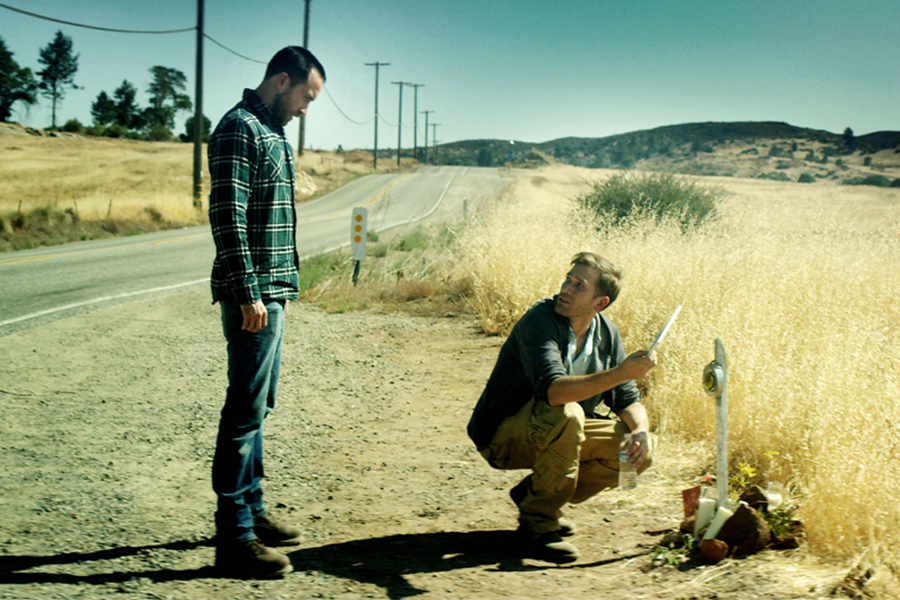
June 10 — The Endless (2017), directed by Justin Benson and Aaron Moorhead
Two brothers revisit the doomsday cult of their childhood in rural San Diego County.
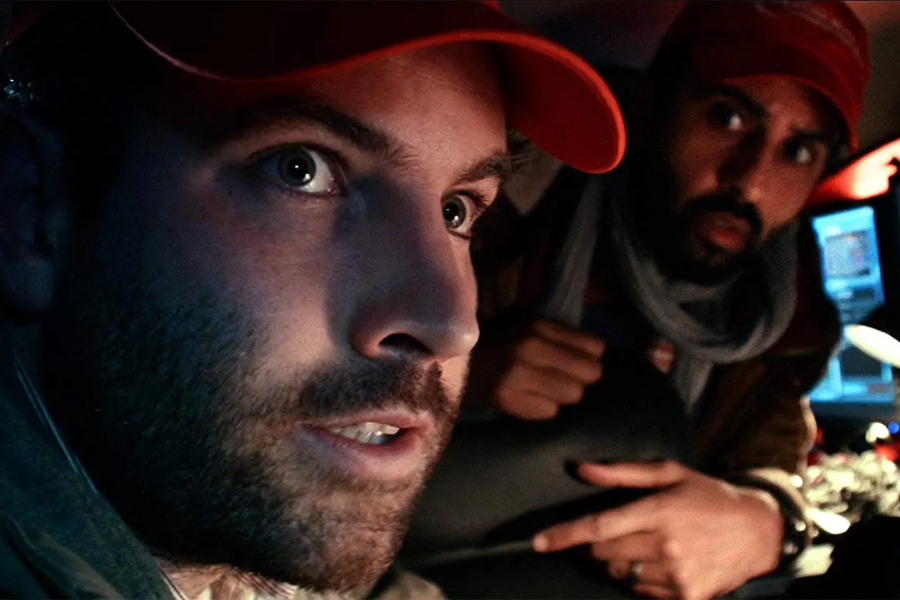
June 17 — Cosmos (2019), directed by Elliot and Zander Weaver
Astronomers hear some strange things while working at a radio telescope.

June 24 — Beyond the Infinite Two Minutes (2020)
(Japanese: ドロステのはてで僕ら), directed by Junta Yamaguchi
A man discovers that his computer monitor shows the future.


I also didn’t care for the voice over in Dark City, but part of that is because for the very hard boiled noir-ish tone of the movie you need the main character to deliver the voice over and they really could not do that. (This is also why I’m the freak who likes the voice over in Blade Runner, because I watch it as a hard boiled mystery in science fiction make-up. Which is also why I hate the ending to the cuts with the voice over, but that’s a different kettle of fish.)
Also I would like to point out that Dark City and The Matrix are only two voices in a three voiced conversation. The Thirteenth Floor also needs to be part of the conversation of 1999 movies about the world as a simulation. One with less cultural impact, but still with something slightly different to say.
Great movie, but yeah, the opening voiceover spoils it in both senses of the word. The Director’s Cut is also about 15 minutes longer and differently arranged.
It occurred to me some years back that this movie could’ve been the basis for a weekly TV series, in the old tradition of an episodic series designed with a pseudo-anthology flavor. Each week, the regular cast would be reborn into new identities and play out different episodic dramas, although there’d be a series arc of them starting to suspect the truth and gradually uncover it. Or maybe the lead character would remember things through the changes and be on a quest to figure out the truth.
Loved this movie. Caught it on cable and watched it several times there. Have the 4k uhd box set which has both the theatrical release and director’s cut. All sorts of commentary tracks and extra features.
I have a soft spot for the movie but it’s always come up a little sort for me. The story isn’t as polished as it should be and frankly, it’s not half as weird as it should be (not to mention that it should have laid the German expressioism on WAY heavier). I can’t help but imagine it all would have been twice as good on half the budget which might have gotten the bean counters off everyone’s back and forced the creatives to think a little looser and wilder (I think the movie really wants to be a Guy Maddin flick at heart).
Part of the problem is also Proyas, whose touch is more literal than dreamlike and the two leads who, while not bad, do nothing for me. I confess to enjoying Sutherland’s silly Peter Lorre impersonation though. That said, it was still all a bit more refreshing than most fantasy films of the last 25 years.
I picked up Dark City as a DVD rental back in the early 2000’s. I read about the movie on a blog that mentioned that it was a good film that was totally obscured by the success of The Matrix. While I don’t rank it as high as some of the other films from the 90’s I did like that it had a sense of style that felt rather unique.